
Top Signs You Need Chimney Cleaning Service – Don’t Ignore These
Most homeowners judge their fireplace by what they can see. A tidy firebox and a clean grate read as “fine.” But the flue is where the real work happens, and the signals that matter most rarely show up where you’re looking. The clearest warning is a strong wood smell in your living room on a warm day with no fire burning. That one beats visible soot every time, and here’s why plus the rest of what to watch for. If reading this makes you uneasy about your own chimney, skip the guesswork and call (855) 337-1241.
Why Some Minor-Looking Signs Are More Urgent Than Obvious Ones
Visible soot tells you a fire happened. It doesn’t tell you anything about the state of the flue. What we’ve learned working in Bellevue is that the serious warning signs are usually quiet and easy to explain away, while the loud, obvious ones often turn out to be cosmetic. That gap is where trouble hides.
Soot on the firebox walls is normal. Creosote glazing, a blocked flue, or moisture working its way into the masonry are not, and none of them announce themselves with a dramatic mess. They show up as a smell, a smoke pattern, or a stain you might drive past without a second look.
We put the signs into two rough groups. Loud signs, like soot and ash, tell you a fire happened. Quiet signs tell you something is going wrong inside the system. The quiet ones are the reason a chimney is a safety system, not just a hole in the roof. Here’s what to watch.
The Warm-Weather Odor Sign
A wood-burning smell drifting through the house on a humid summer afternoon, with no fire lit, is a stronger warning than a dirty firebox. It usually means creosote has built up to the point where it’s off-gassing, and heat and damp air push that smell back into the room.
Creosote moves through stages. First it’s a light, flaky dust you could brush away. Then it turns sticky. At the third and hardest stage it becomes a hard, glossy glaze. That glaze is stubborn, and a basic brush may only skim the surface and leave the heavy layer behind. This is why a standard sweep sometimes isn’t the end of the story.
In Bellevue, where humidity climbs in the warm months, that indoor smell is one of the first things a homeowner calls us about. A proper chimney sweep tells you what’s actually in the flue, not just that the smell went away. When the coating is too heavy to remove with a brush, we turn to HeatShield resurfacing to restore the flue instead of tearing it down. Restore before you replace is our default when the tiles can still be saved.
If your house smells like last winter’s fires long after the last one burned, that’s your cue.
Read the Smoke: What It’s Telling You
Smoke is a diagnostic tool. Where it goes and when it goes there points to different problems, and the pattern matters more than the amount.
- Smoke spills into the room at startup, then clears. This is often a cold flue. It needs a minute to warm up and start drawing. A quick check for a partially closed damper is worth doing first.
- Smoke keeps coming into the room ten minutes or more in. The draft isn’t recovering. This points to a restriction in the flue, often creosote buildup or a blockage that won’t clear on its own. Stop and get it looked at.
- Smoke behaves inconsistently, fine one night and spilling the next. This pattern is harder to pin down. It can tie to pressure changes, wind, or the condition of the flue, and it’s the reason a real inspection matters rather than a guessing game.
Smoke that won’t go up and out is smoke that isn’t leaving the house the way it should. That’s the whole point of the flue. If you find yourself in this pattern in your Bellevue home, it’s time to stop using the fireplace until someone qualified has looked at the whole system. When we inspect, we look top to bottom, not just at the firebox.
A Clean-Looking Firebox Isn’t Proof of a Clean Chimney
The most common misunderstanding we run into is the assumption that a swept-out firebox means a clean chimney. It doesn’t. The firebox is the one part you can see, and it’s a fraction of the system.
The flue above the smoke chamber is where creosote collects and where most restrictions form. It’s dark, it’s out of reach, and what happens up there doesn’t show up where the fire sits. A tidy firebox can sit beneath a heavily coated flue and you’d never know from looking.
That’s why we inspect with a camera and hand you a photo report with what we found. You shouldn’t have to take our word for what’s happening inside a chimney any more than you should take a plumber’s word for what’s inside a wall. See the evidence, then decide. Nothing gets recommended without it, and we’ll tell you plainly when work can safely wait until another time.
The visible portion of the firebox does tell you something, though. Cracked mortar joints or a warped damper point to strain the firebox has taken over time, and that’s worth a closer look at the rest of the system. One call covers the sweep, the inspection, the repair if you need one, and the cap work at the top. You’re not juggling contractors who each blame the other.
Animal Activity: When It Crosses From Nuisance to Safety Concern
Birds, squirrels, and other animals treat a chimney as prime real estate. That’s annoying. It becomes a safety concern the moment nesting material and debris start to restrict the flue, because a blockage behaves the same as a heavy creosote coat from a combustion standpoint.
Watch for these signs:
- Scratching, chirping, or flapping sounds coming from the chimney
- Twigs, leaves, or debris collecting inside the firebox or on the damper
- Smoke or smell backing into the room with the damper open
- A sudden drop in draft after a quiet spell
A missing or loose chimney cap is the usual way in. A proper cap with mesh keeps animals out and stops rain from getting in at the same time. We install and repair caps and crowns, and it’s one of the simpler fixes that prevents bigger ones. If you’ve heard something in your Bellevue chimney, don’t burn a fire and hope it climbs out. Call for an inspection and a sweep, and get the cap sorted so it doesn’t happen again.
The Sign That Means Stop: White Staining on the Masonry
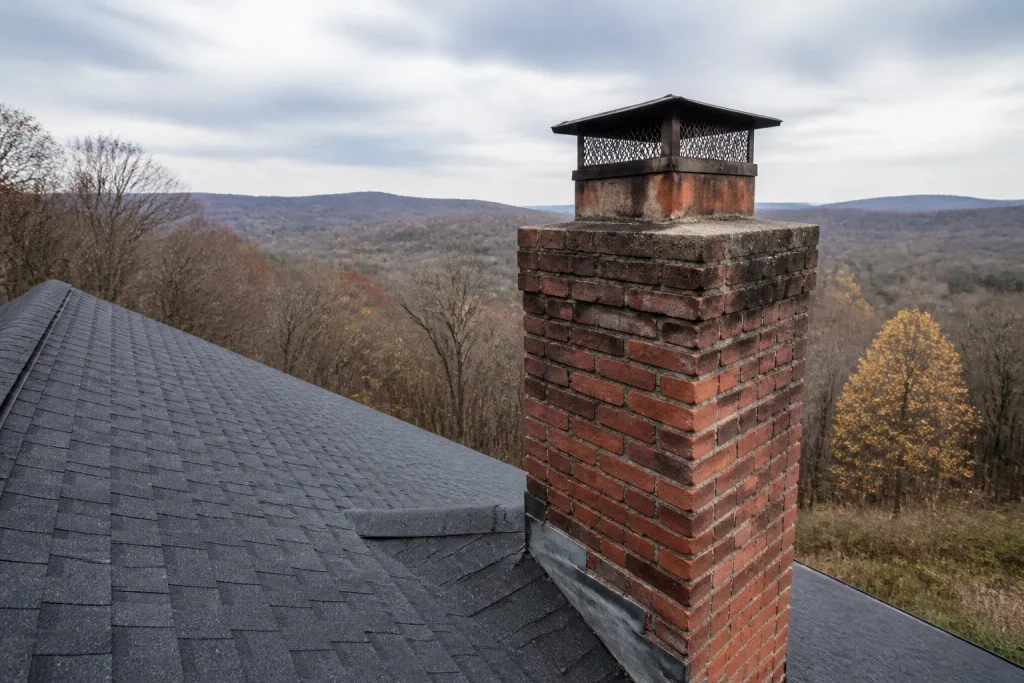
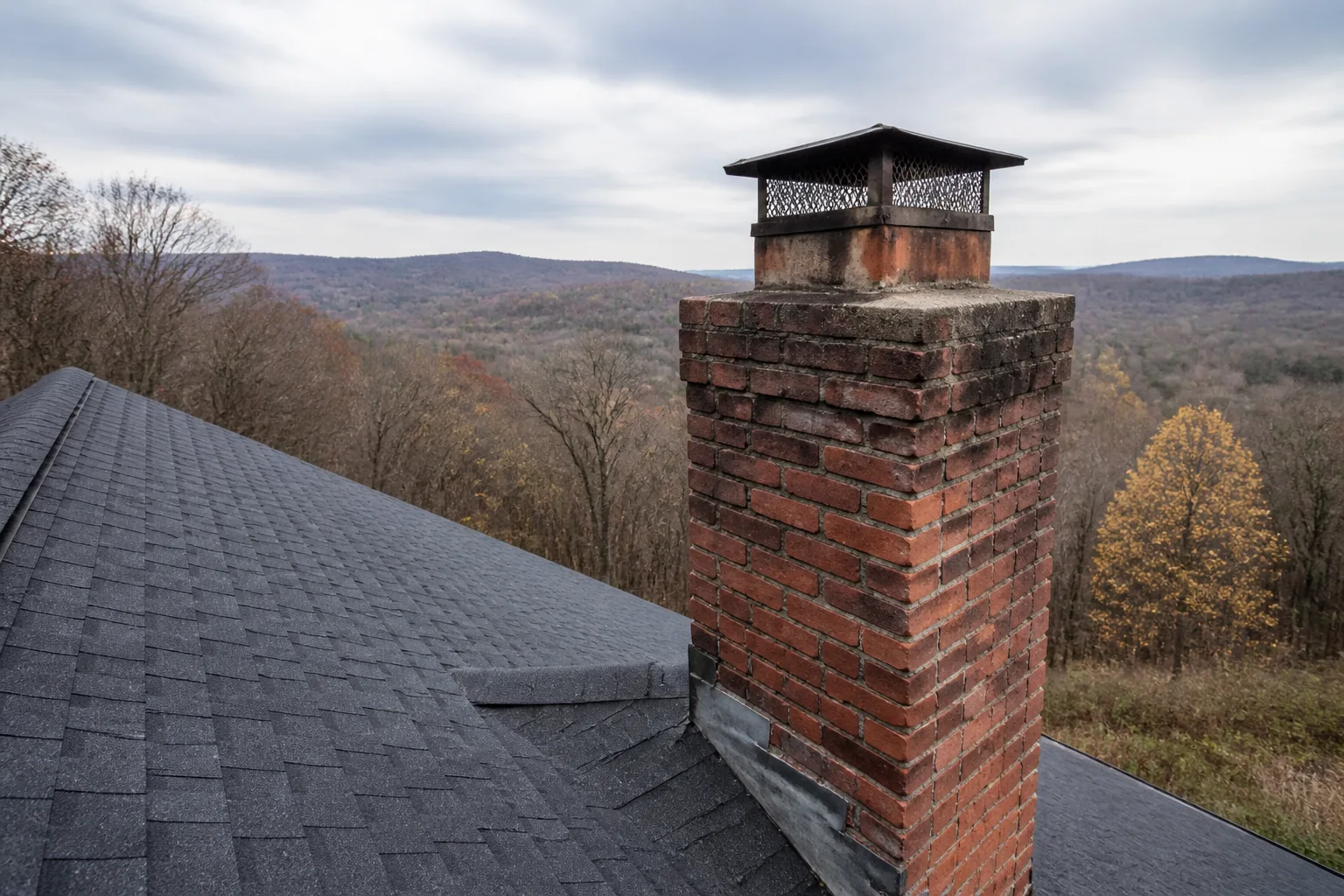
White, chalky staining on the exterior masonry above the roofline is the one sign that should make you stop using the fireplace immediately. Don’t wait for the annual sweep. This is efflorescence, and it’s your chimney telling you water is getting in and moving through the masonry.
Water is the leading cause of long-term chimney deterioration. It works at the brick from inside, breaking down the mortar that holds everything together. Left alone, it leads to a much bigger repair than a crown fix. If you see white staining, get the chimney looked at before your next fire, not after.
In our experience, Bellevue homes with older masonry are especially worth keeping an eye on. A cracked crown or a failing cap lets water in where it shouldn’t go. We use trade-spec products like Gelco and Famco crowns and caps to close off that intrusion at the top, where it starts. Call (855) 337-1241 for a free estimate if you’re not sure what you’re looking at on the roof.
When to Call a Pro
Here’s the short version. A warm-weather smell that won’t quit, smoke that refuses to draw, animal noise in the flue, or white staining on the masonry all mean it’s time to call. Soot and ash alone don’t. Our technicians have up to 15 years of experience and can walk you through what they find.
Related services in Bellevue: a maintenance chimney sweep, fireplace repair for the firebox and damper, and chimney cap & crown work to keep water and animals out. Each one ties back to the same idea: the chimney is a system, and we fix what’s wrong, not just what’s dirty.
The Bottom Line
The quiet signs matter more than the loud ones. A recurring wood smell in warm weather, smoke that won’t draw, animal debris, and white staining on the masonry are your chimney telling you to act. White staining means stop burning and call now. Soot alone is no emergency. Our technicians work with DuraFlex and Olympia Chimney systems when a liner needs attention, and we can often restore a flue with HeatShield before anyone has to talk about a rebuild.
If you’re in Bellevue and need help, Chimney Sweep Bellevue offers free estimates. Call (855) 337-1241. We answer 24/7. Fast dispatch from 7am to 7pm, Sunday through Friday. When you book a sweep, the price is agreed before we start, so there are no surprises on the invoice.
Frequently Asked Questions
Once a year for most wood-burning fireplaces, which lines up with NFPA 211 recommendations for annual inspection. If you burn a lot of fires or use unseasoned wood, a mid-season check is worth it. Call (855) 337-1241 for a free estimate.
Creosote keeps building, draft gets weaker, and the risk of a chimney fire or carbon monoxide backing into the home goes up. It’s not worth the savings. Call (855) 337-1241 and we’ll inspect the whole system and show you what’s going on.
It usually means heavy creosote has built up and is off-gassing when warm, humid air pushes back down the flue. That’s a sign to get a sweep and an inspection before colder weather. Call (855) 337-1241 for a free estimate.
Yes, treat it as one. Efflorescence means water is getting into the masonry and breaking it down. Stop using the fireplace and have it inspected. Call (855) 337-1241. We answer 24/7.
Written by the team at Chimney Sweep Bellevue.
Need Chimney Cleaning Help?
Call Chimney Sweep Bellevue - the local pro we connect you with is licensed and insured, here with fast help in Bellevue.
(855) 337-1241