
How to Choose the Right Chimney Cleaning Company in Bellevue
A sweep with a proper certification and a handyman running a low-price special can both hand you a receipt that says “cleaned chimney.” Only one of them is actually looking at the system that decides whether your fireplace is safe to light. The trouble is that you can’t tell the two apart from a website or a phone quote. You can tell them apart with three questions. This guide is those three questions, the answers that should reassure you, and the answers that should make you keep looking.
If you’d rather skip the search and talk to a specialist, call (855) 337-1241. We answer 24/7. Fast dispatch from 7am to 7pm, Sunday through Friday.
Key Takeaways
- Ask what level of inspection comes with the cleaning, what written documentation you get, and what happens if they find a problem.
- Certification matters because of what it requires technicians to understand about liner integrity, draft, and clearances, not because of the badge.
- A quote that starts low and grows mid-job is a red flag unless the added finding comes with photo or camera evidence you can see.
- Bellevue’s older craftsman homes and newer builds have genuinely different chimney profiles, and local experience matters for both.
- No written report means no second booking, no matter how good the price was.
What are the three questions to ask before you book a chimney sweep in Bellevue?
Ask these before you book: what inspection level comes with the cleaning, what documentation you receive afterward, and what happens if they find a problem. A specialist answers all three without hesitating. A generalist usually answers the first one with something vague and the last two not at all.
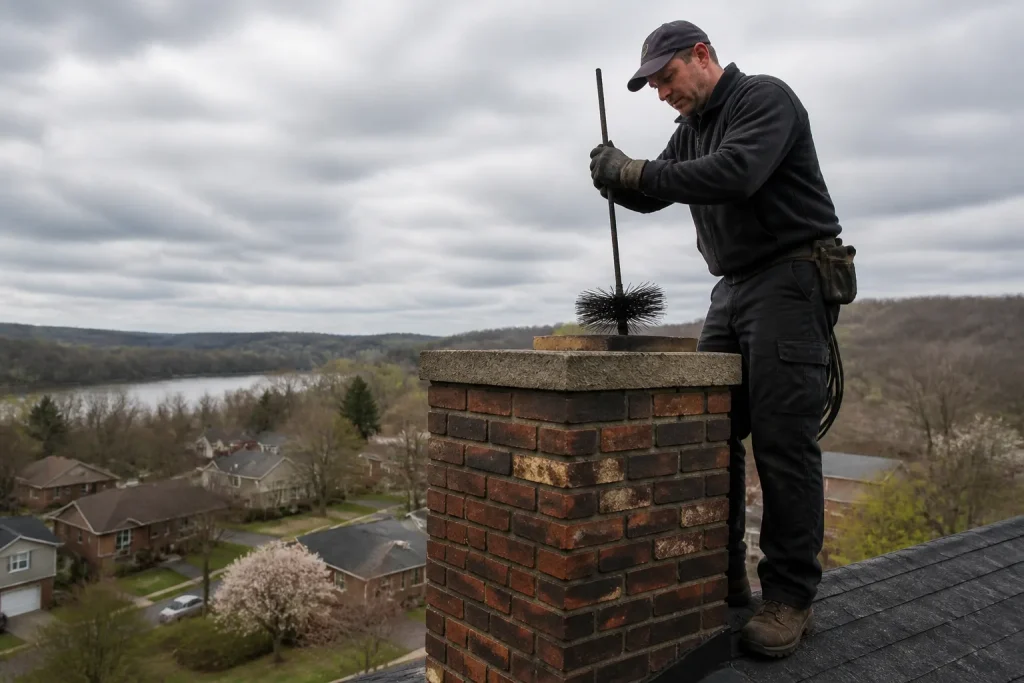
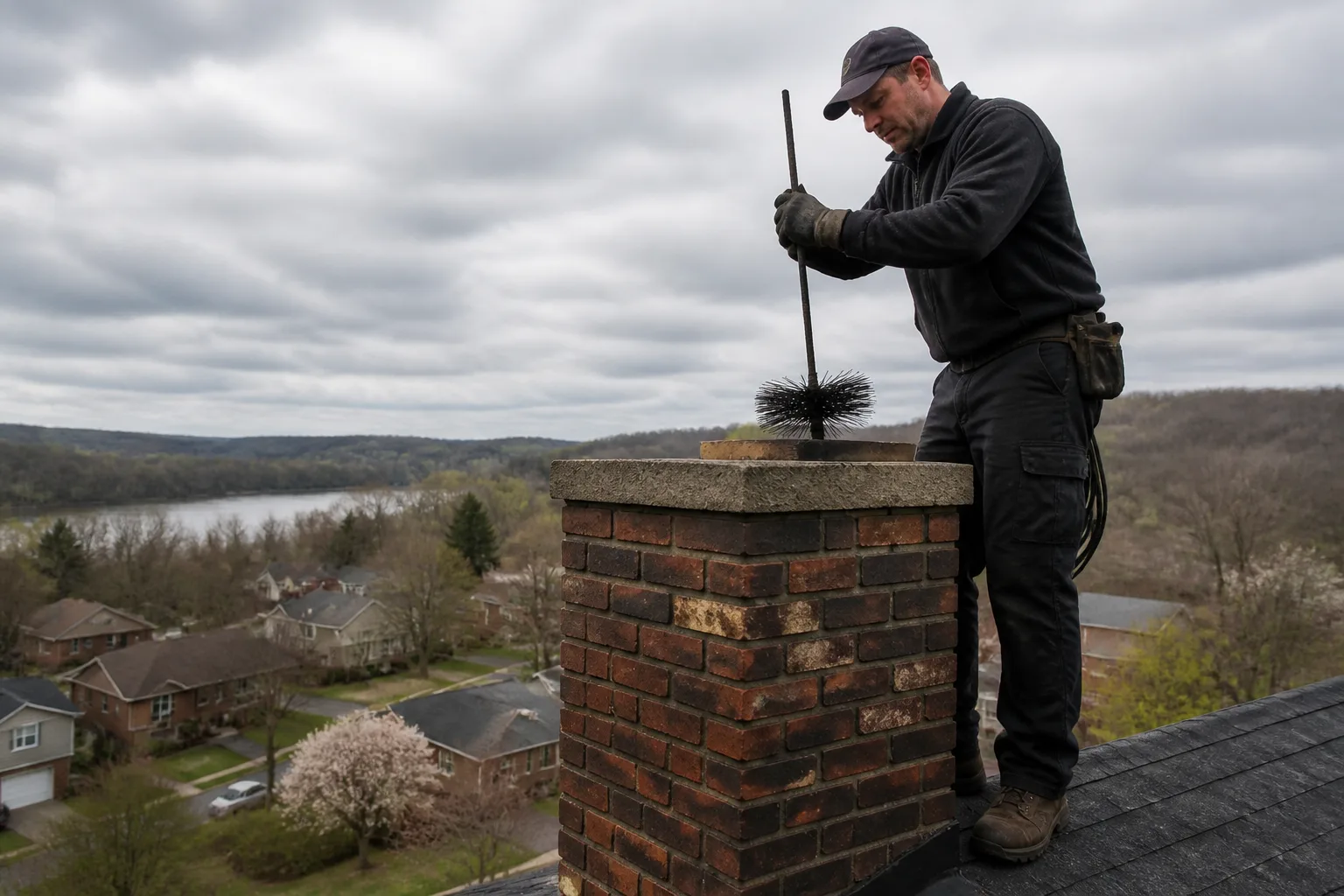
1. What inspection level comes with the cleaning? A routine sweep should come with a Level 1 inspection of the accessible parts of the system, meaning the firebox, damper, flue, and whatever can be seen from the roof and the hearth. If the answer is “we just clean it,” you’re paying for a brush and nothing else. When you book a chimney sweep with us, the inspection is part of the visit, not a separate line item.
2. What documentation do I get? You should receive written findings, ideally with photos of anything flagged. A company that cleans and leaves without telling you what it saw has left you with no record and no way to check the work.
3. What happens if you find a problem? A specialist explains the finding, shows you the evidence, tells you whether it’s urgent or can wait, and quotes the repair. A generalist either ignores what they saw or hands the job to someone else and adds a markup.
Those three answers tell you more about a company than any review page. They’re also hard to fake on the spot, which is exactly why they work.
Why does certification matter structurally, not just as a credential?
Certification matters because of what a certified technician is required to understand about the whole chimney system: liner integrity, how draft actually works, and the clearances between the chimney and the combustible parts of your house. A brush handler needs none of that knowledge. A certified technician needs all of it.
Think about what a sweep can miss without that grounding. A flue tile with a hairline crack looks fine from the top and passes a quick visual check, but it lets heat and combustion gases reach framing over time. A chimney that doesn’t draft correctly can push carbon monoxide back into the room instead of up and out. Clearances to wood framing are invisible once the chimney is enclosed, and getting them wrong is a fire risk that builds quietly for years.
This is why the credential question isn’t about the badge on the website. It’s about whether the person on your roof knows what to look for beyond soot. When our technicians inspect, they’re checking the full system, not just the firebox, because the firebox is the part you can already see.
One practical note: ask how long the technicians have been doing this work. Our technicians have up to 15 years of experience, and that kind of time on roofs is what turns a checklist into a trained eye.
How do you read a quote that starts low and grows?
A legitimate additional finding comes with evidence you can see: a photo, a camera view of the flue, or a damaged part held up in front of you. A quote that grows without evidence is upselling, and you can decline it.
Here’s the pattern to watch for. A company quotes a low number to get the booking. Mid-job, they tell you the liner is shot, the crown is failing, or the whole chimney needs rebuilding. Sometimes that’s true. Often it’s a way to make the original low price back on the back end.
How to tell the difference:
- Evidence first. A specialist shows you the camera footage or the photo before quoting the repair.
- Options, not ultimatums. You should hear what happens if you repair now, and what happens if you wait a season.
- Restore before replace. Some flue damage can be resurfaced rather than rebuilt. HeatShield is a proven resurfacing material for exactly this situation, and a company that doesn’t offer it may jump straight to demolition because that’s the only tool it has.
- A written scope. The repair quote should say what’s being fixed and with what materials, not just a number.
If a company can’t show you why the price went up, that’s your answer. Nothing about a chimney is so urgent that you have to accept an unexplained number standing in your living room.
Why does Bellevue’s housing mix matter when choosing a company?
Bellevue has a real mix of older craftsman homes and newer builds, and those two groups have genuinely different chimney profiles. A company that works here regularly has seen both. A franchise sending whoever is available may be seeing your type of chimney for the first time.
Older craftsman homes often have original masonry chimneys with clay tile liners, sometimes with decades of use behind them and the cracks to show for it. They may have been converted from coal to wood somewhere along the way, which changes what’s inside the flue. The crown on a chimney that age is often the weak point, which is why chimney cap & crown work matters so much on these houses. Water getting in at the top is the leading cause of long-term chimney deterioration, and a failing crown is usually where it starts.
Newer builds often have factory-built fireplaces or gas appliances with their own venting requirements, which are a different job entirely from sweeping a masonry flue. A sweep who only knows masonry chimneys, or only knows factory-built units, will be out of their depth on half the houses in town.
Local experience also means a company that knows what to expect from the housing stock here, rather than treating every chimney as generic. That’s worth more than a discount. You can learn more about how we approach the full system on our Chimney Sweep Bellevue page, or ask about fireplace repair if the firebox itself is the concern.
What should a post-service report contain?
At minimum, a post-service report should state what was inspected, what was found, what was cleaned, and what needs attention and when. If a company doesn’t leave you written findings, don’t book them again regardless of the price.
Here’s what to look for:
- The inspection level performed. Level 1 for a routine sweep, higher if the situation called for a camera.
- Condition of the flue liner. Intact, cracked, or needing resurfacing, described plainly.
- Condition of the cap and crown. These are the top-of-chimney parts that keep water out.
- Draft and clearance observations. Anything that affects how gases leave the house.
- Recommendations with timing. What should be done now, and what can safely wait a season.
- Photos of anything flagged. This is what lets you verify the finding rather than take it on faith.
That last point matters more than people expect. The real hesitation most homeowners have is being told they need thousands of dollars of liner or masonry work with no way to check it. A report with photos and camera footage answers that hesitation directly. A one-line receipt doesn’t.
When to call a pro
Call a specialist if it’s been more than a year since your last sweep, if you’ve noticed smoke coming back into the room, if you smell a strong creosote odor in warm weather, or if you’ve moved into a house and don’t know the chimney’s history. Those are the situations where the difference between a specialist and a generalist actually shows up.
And to be clear about our own limits: we don’t do roofing, HVAC, or general contracting. Chimney and fireplace work is the whole job, which is why the inspection, sweep, cap and crown, and any liner work happen in one visit rather than across three contractors. It also means when we tell you something is fine, we have no reason to invent a problem to sell you something else.
Related services in Bellevue: chimney sweeping, inspection, cap and crown repair, fireplace repair, and liner resurfacing using trade-spec materials. One call covers it.
The Bottom Line
You don’t need to be a chimney expert to hire one. You need three questions and an ear for dodged answers. Ask what inspection comes with the cleaning, ask what documentation you get, and ask what happens if they find a problem. Then watch whether the answer comes with evidence or a shrug.
Our technicians have up to 15 years of experience reading exactly these signs, and we lean on proven, professional-grade materials like HeatShield for resurfacing, Gelco and Famco for caps and crowns, and Olympia Chimney and DuraFlex for relining when a liner genuinely needs replacing. Nothing gets recommended without evidence you can see for yourself, and we’ll tell you straight when work can safely wait.
If you’re in Bellevue and need help, Chimney Sweep Bellevue offers free estimates. Call (855) 337-1241. We answer 24/7. Fast dispatch from 7am to 7pm, Sunday through Friday, and the written estimate sets the final price.
Frequently Asked Questions
We don’t quote a flat figure for every Bellevue home because a chimney sweep costs whatever the written estimate says for your particular system, and that depends on the type of chimney, its condition, and whether any repair is needed. The estimate is free, so you’ll know the number before any work starts. Call (855) 337-1241 for an exact quote.
Not always, and you shouldn’t accept that answer without seeing the evidence. A cracked flue tile can sometimes be resurfaced with HeatShield rather than replaced. When we find a liner problem, we show you the camera footage or photos, explain what happens if you wait, and let you decide. Call (855) 337-1241 for an exact quote.
Once a year for a chimney you use regularly, which lines up with the annual inspection recommendation most safety standards point to. If you burn a lot of wood or notice creosote buildup, don’t stretch it out. Call (855) 337-1241 for an exact quote.
Creosote builds up in the flue and can ignite, and a blocked or damaged flue can push carbon monoxide into the house instead of venting it outside. Those are the two risks a sweep is looking for. Skipping a year isn’t automatically a disaster, but skipping several is how small problems turn into structural ones. Call (855) 337-1241 for an exact quote.
Written by the team at Chimney Sweep Bellevue.
Need Chimney Cleaning Help?
Call Chimney Sweep Bellevue - the local pro we connect you with is licensed and insured, here with fast help in Bellevue.
(855) 337-1241